Advancing Financial Health and Resilience
Building financial resilience and well-being together
Why financial health and resilience matter for people, businesses, communities and future generations
We live and work in a period of profound uncertainty. Households, small businesses, non-profits and communities are navigating affordability pressures, economic and geopolitical uncertainty, more frequent extreme weather events, technological disruption and rapidly changing labour markets. Many are also managing the financial effects of caregiving, health challenges, income volatility and other significant life and other events.
These interconnected pressures can affect health and well-being, housing, employment, business continuity and entire communities. Financial health and resilience are therefore about much more than money: they influence people’s ability to live with dignity, make choices, withstand shocks and pursue their life and financial goals.
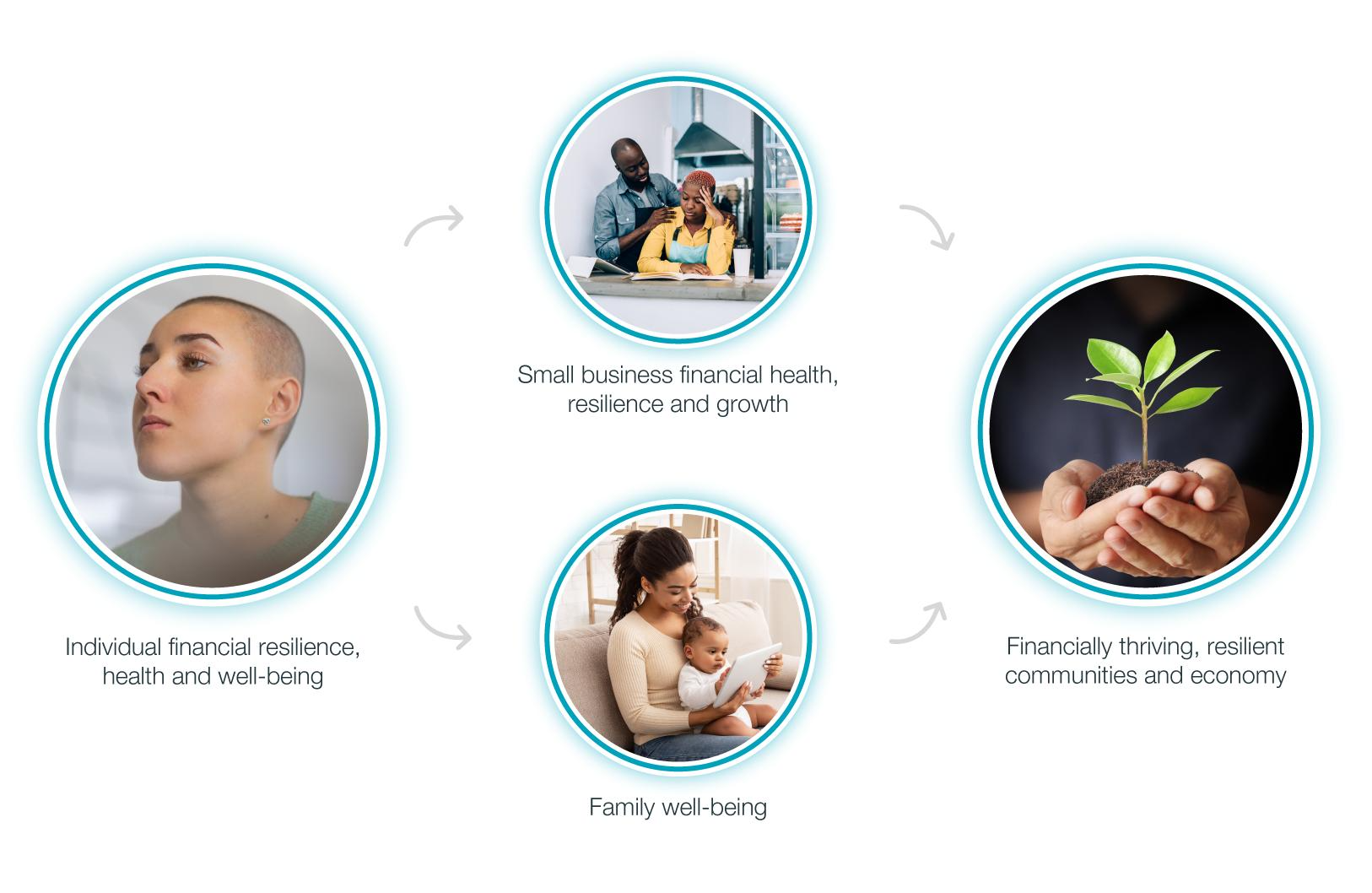
Helping people and organizations build their financial health and resilience throughout their lives, while fostering their overall resilience can create multiple and interconnected social, financial, economic and sustainable outcomes. Stronger resilience can support greater financial security and confidence, improved overall well-being, more sustainable businesses, stronger employment and more inclusive, resilient, thriving communities.
Improved Financial health and resilience aligns closely with six key Sustainable Development Goals and the Purpose, Vision and Impact goals and priorities of our non-profit.
The evidence tells us that action is needed
Financial Resilience Institute’s research demonstrates the scale of financial vulnerability, and the opportunities for more effective, targeted action.
For example In February 2026, Canada’s Mean Household Financial Health Score was 53.34, with households just ‘Approaching Resilience’ nationally, but 74% of households having some level degree of financial vulnerability, and significantly increased financial vulnerability for many populations, including those facing systemic barriers.
Households financially affected by extreme weather events similarly have a Mean Financial Resilience Score of 49.3 as of February 2026, compared with 54.5 for those not affected. The financial vulnerability gap widened from 3.9 Index points in February 2024 to 5.2 points in February 2026. Based on our Canadian SMEs 2026 Business Financial Health and Resilience Report, 73% of SMEs want to better understand improve their business financial health and resilience while 46% reported costs rising faster than revenues and 36% experienced high financial stress. 84% believe financial institutions could do more to support their business financial resilience as of December 2025.
Financial Vulnerability as a Mainstream Issue
While our work is international, see this video on financial vulnerability as a mainstream issue in Canada, building on our Institute’s extensive reports published since 2017 and world-leading Financial Health and Resilience Index.
Behind these numbers are people, families and business owners managing today while building for the future, and clear opportunities for financial institutions, governments, employers, non-profits and other purpose-led organizations to help.
Check your free individual financial resilience score tool and access independent resources to help you move forward with this being used by valued clients such as Co-operators for good.
Alternatively access our Institute’s open- source Financial Well-Being Index Model and Toolkit linked to an overall personal well-being score for your organization or community, or learn more about the Business Financial Health and Resilience of SMEs in India, including Women-Led SMEs.
When individuals and businesses thrive, so do families, communities and our economies
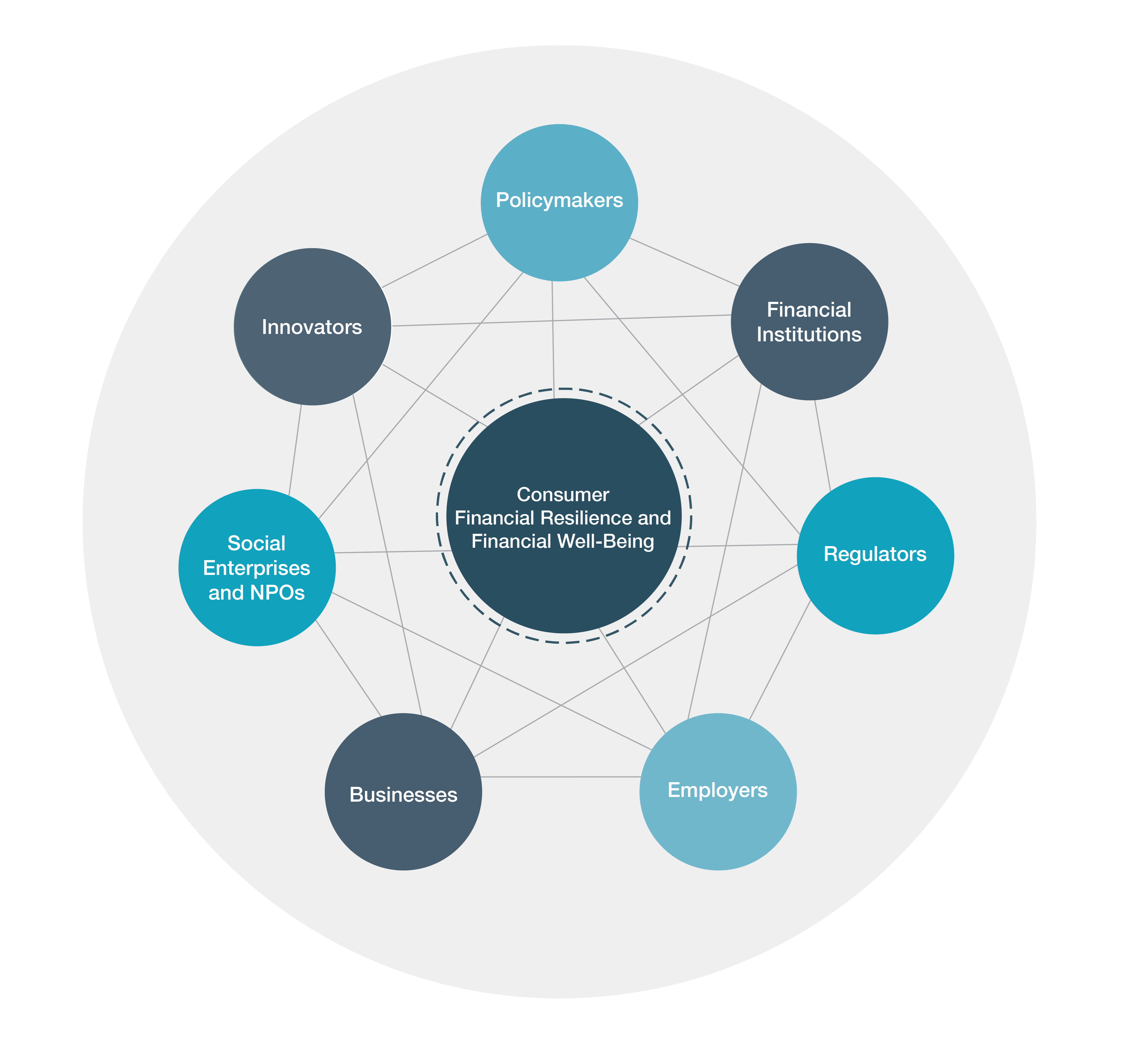
In view of important connections with growth and stability, there is a growing interest from financial sector authorities, regulators, supervisors, governments, financial institutions, employers and innovators in understanding and advancing financial health and resilience at the household and macro levels.
Turning access into meaningful and measurable impact
Financial health and resilience and financial well-being must be understood and measured holistically. The objective is not simply to expand access to financial services, but to determine whether individuals, families, businesses and communities are better able to manage their financial lives, withstand adversity, pursue opportunities and progress towards their goals.
Achieving this requires independent, evidence-based intelligence and human-centred solutions that put people and financially healthy lives at the centre. It also requires cross-sector collaboration, sustained outcomes measurement and continuous innovation.
Driving Systemic Change for a More Financially Healthy and Resilient World
We're working to help build a more financially resilient future for people around the world, including those who are most financially vulnerable, underserved or need help most, by advancing systemic change through improved financial health, resilience and well-being. We're working alongside financial health innovators, clients and partners globally and support evidence-based decision-making, targeted impact and innovation at scale.
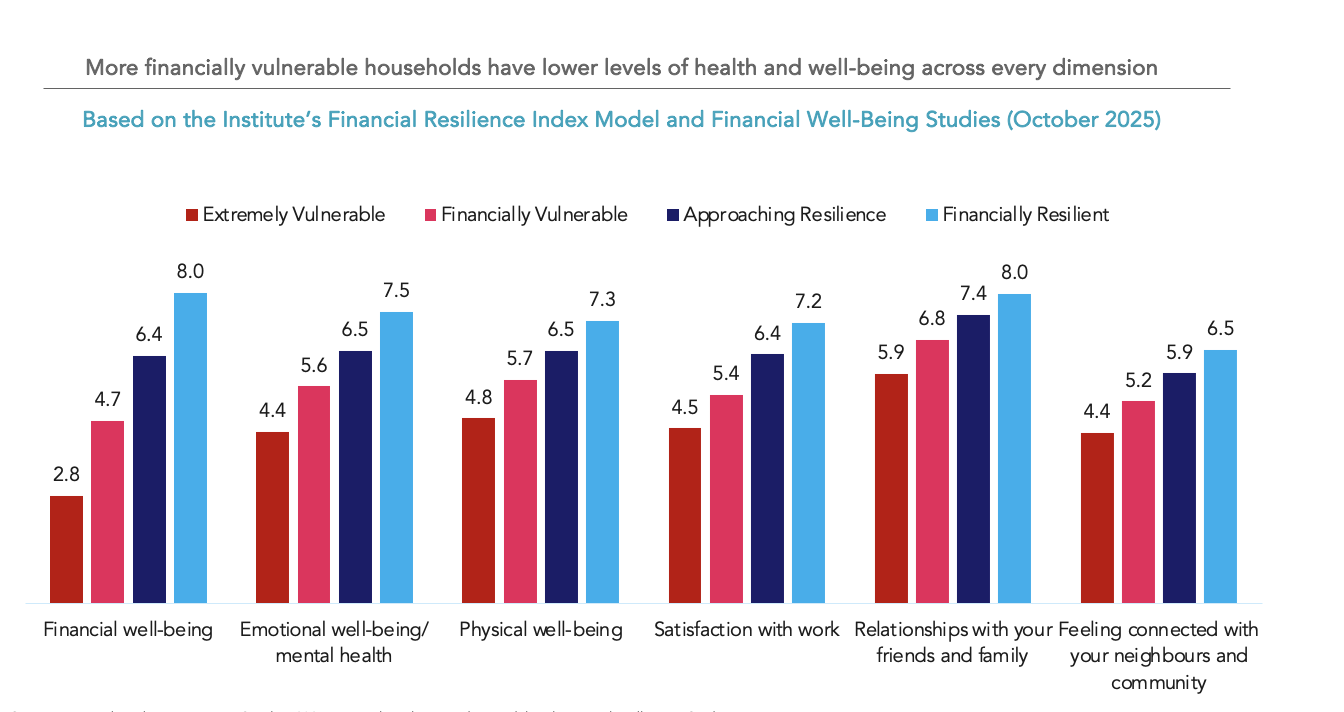
More financially vulnerable households have lower levels of financial well-being and all well-being dimensions: with this the social impact case for Policymakers and others working to help improve financial resilience and financial well-being. See our joint report with Statistics Canada published in 2021 with linkages to the government’s Quality of Life Framework.
By better understanding financial health and resilience, more nuanced fiscal, monetary, financial and social policy levers, policies and programs can be developed to help drive positive financial resilience outcomes with a sharpened aim at specific underserved and more vulnerable populations.
Planned and unplanned life events, stressors and shocks have effects at multiple levels, with financial resilience and financial well-being enablers of overall resilience, health and thriving communities.
Global financial health innovation is advancing through the leadership and collaboration of the UNSGSA, UNEP Finance Initiative, CGAP, the Bank for International Settlements Financial Stability Institute, Financial Health Network, OECD and other leading organizations. The Institute is proud to contribute to this global movement, building on more than 15 years of dedicated financial health practice.
Together, we can contribute to more financially secure and empowered people, stronger businesses, improved well-being, more resilient economies and communities, and ultimately, a more inclusive and sustainable future for generations to come.
Find out more through accessing data and reports on, for example, economic inclusion and mobility, climate change impacts on household financial vulnerability or protection as a pathway to financial resilience.