Definitions and Personal Financial Well-Being Framework
Financial Well-Being, as defined by the US Consumer Financial Bureau (CFPB) is ‘a state of being wherein a person can fully meet current and ongoing financial obligations, can feel secure in their financial future, and is able to make choices that allow them to enjoy life.’ This aligns with the G20 Policy Note on Financial Well-Being and other leading definitions. Below is the Personal (Consumer) Financial Well-Being Framework developed by our organization in 2016.
Definitions and Financial Well-Being Framework
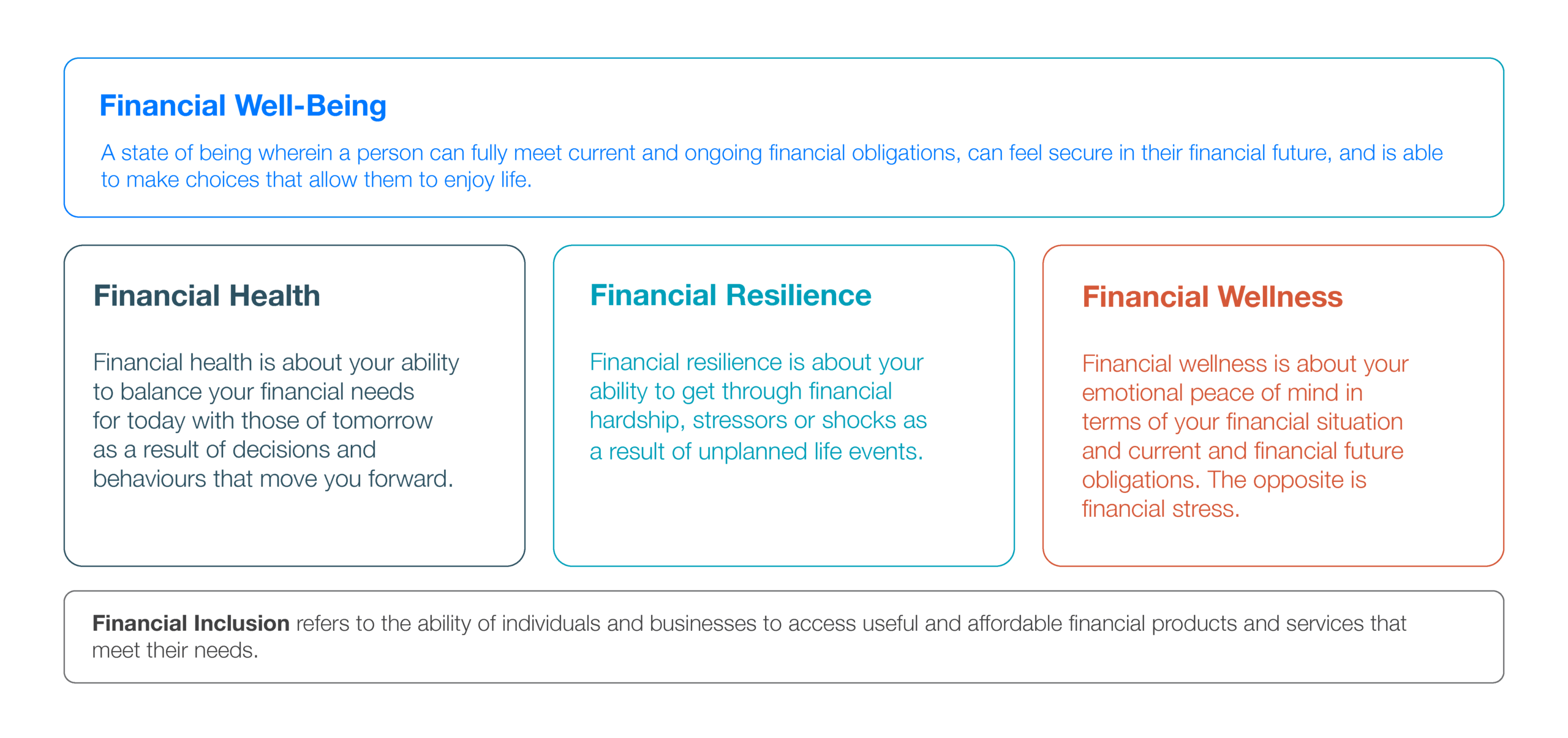
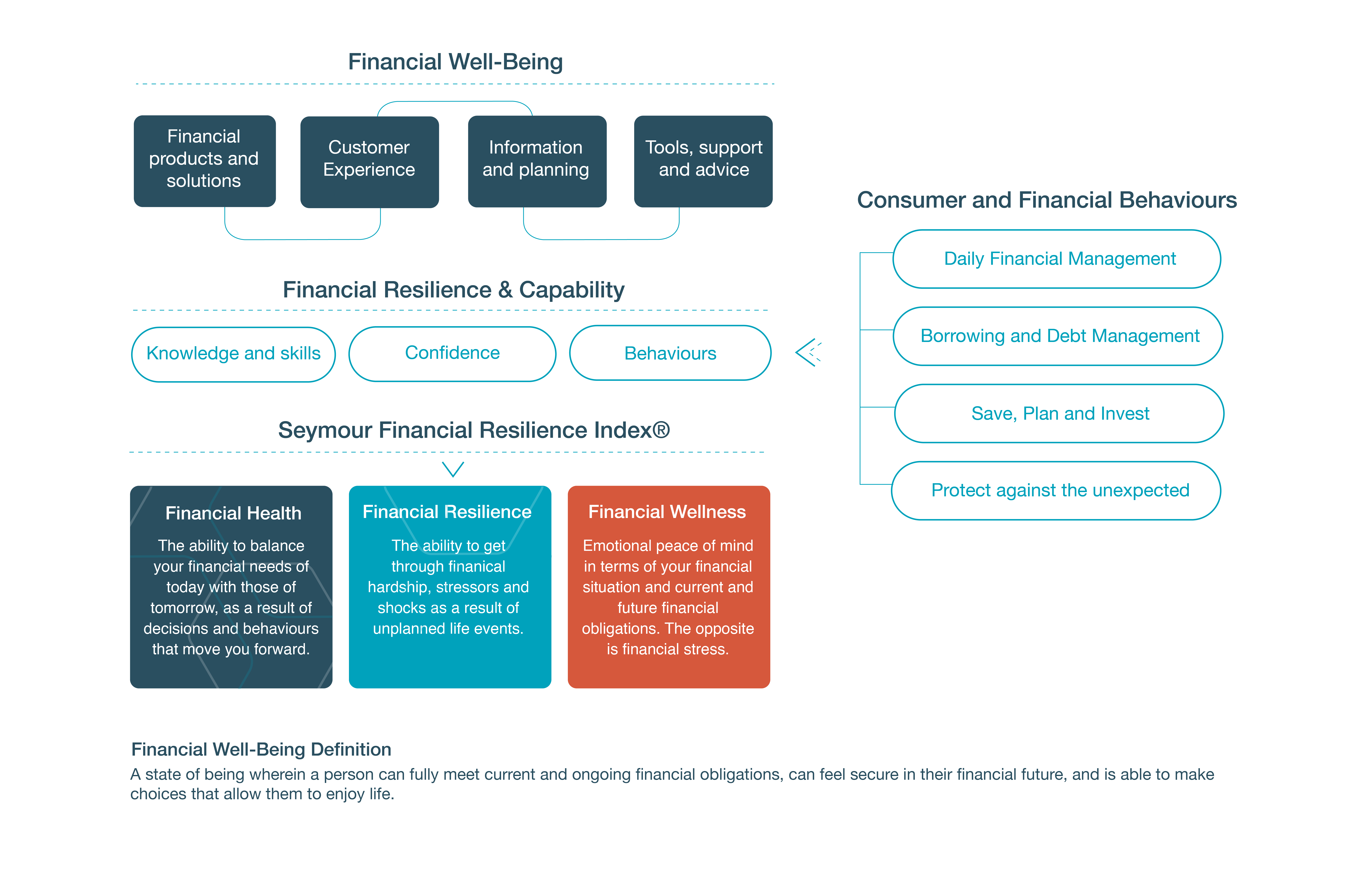
The Personal Financial Well-Being Framework, developed by our organization in 2016, was first presented at the Financial Consumer Agency of Canada’s 2017 Financial Literacy Research Symposium and peer-reviewed by many organizations. Developed through extensive desk research, quantitative and qualitative research, consumer consultations, and peer review by leading academics, financial health experts and financial institution leaders, it provides a holistic view of the complex, multi-dimensional construct of an individual’s financial well-being. It also underpins the Institute’s longitudinal Financial Well-Being Studies instrument (2017–2026), with applications across other countries.
The holistic Financial Well-Being Framework and definitions remain highly relevant and continue to evolve with new evidence and people’s changing financial lives. The Framework defines and connects the inter-related constructs of financial health, financial resilience, financial wellness, financial inclusion and financial capability within the over-arching construct of financial well-being.
It considers consumer and financial behaviours across the financial spectrum: daily financial management; saving, planning and investing; debt and credit management; and protection over the short, medium and longer term. It combines reported objective and subjective indicators with administrative and other data. Many of these indicators are tracked through the Institute’s Financial Well-Being Studies instrument, together with customized questions.
Indicators measured within the Framework
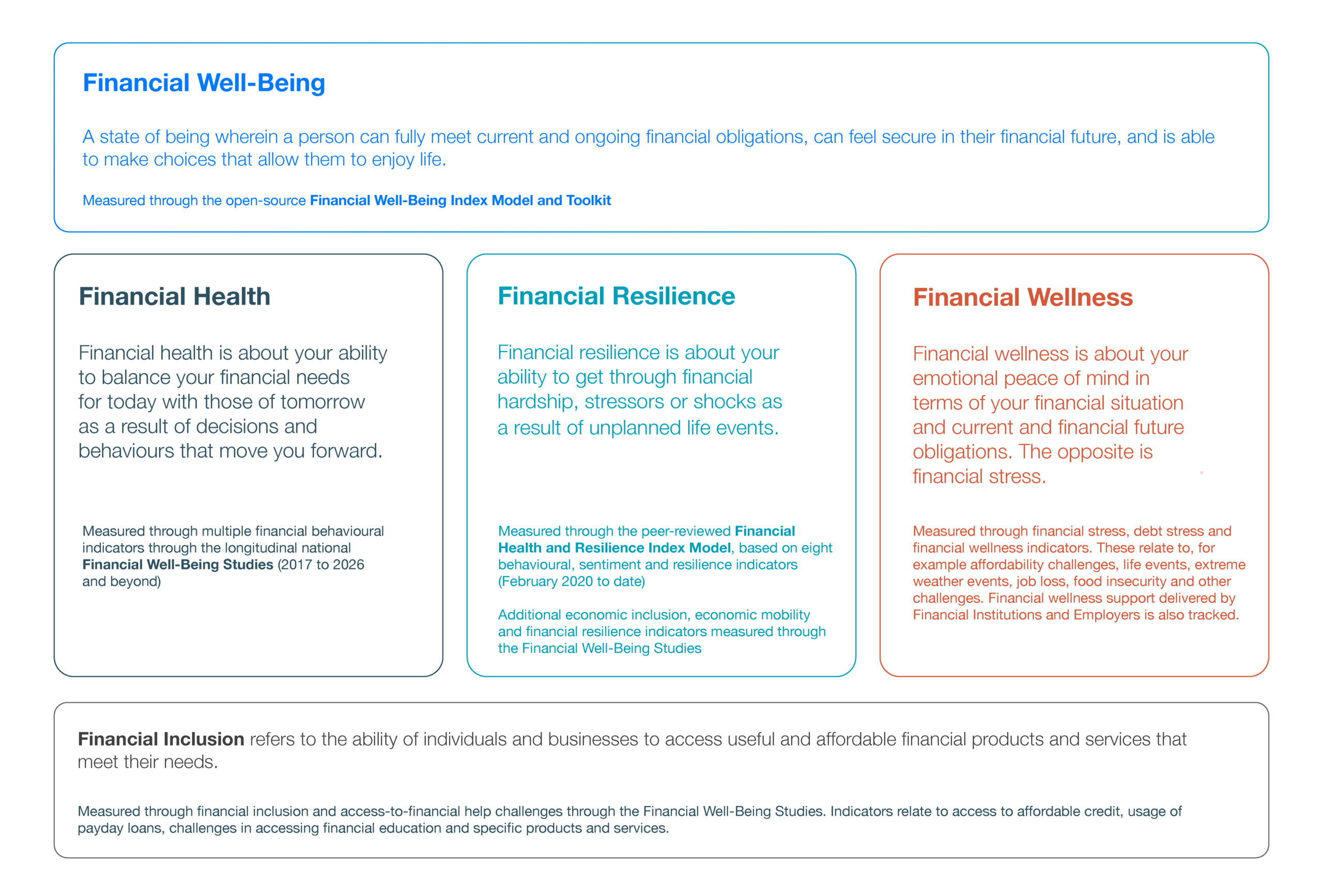
The Framework also encompasses financial inclusion, access to financial help, financial agency and locus of control, including the extent to which people feel able to influence their financial circumstances, make informed decisions and take meaningful action towards their goals. It considers financial and debt stressors, consumer and financial behaviours, and key levers that consumers can pull, and organizations can lean into, to help drive improved financial health and resilience and financial well-being outcomes. Through our wider body of research and work, it also links financial well-being to overall health and well-being.
The Framework considers the financial services enablement support that consumers can put in place themselves or receive from Financial Institutions, Employers, policymakers and other organizations. This includes financial products and solutions, access to and delivery of credit, financial education and digital tools, as well as programs and interventions from Policymakers, Employers and Non-Profit organizations that support consumers, employees and families.
Shared widely, the Framework contributes to an evolving international body of knowledge, frameworks and thinking advanced by the CFPB; world-leading financial well-being academic and expert Professor Elaine Kempson; the OECD; CGAP and the World Bank Group; UNEP Finance Initiative; Financial Health Network; and other organizations. Together, these frameworks and bodies of work are helping to advance financial health and financial well-being impact and enable financial systems to move beyond access and usage towards measurably improving people’s financial lives.
More information and insights on the Financial Well-Being Framework and Financial Well-Being Studies instrument are available here.
The framework has also shaped the development of the Financial Health and Resilience Index Model and the Financial Well-Being Index Model and Toolkit. Access all Institute reports to see how we are using these instruments in tandem.